
Three weeks to go. The venue is booked, the speakers are confirmed, the lanyards are printed.
And you’ve sold 60 tickets out of 200.
Somebody in the planning meeting says it. “Should we do a video?”
If you’ve sat in that meeting, this is for you. You run events for your business, your network or your members, and you need people to actually turn up. Not polite interest. Names on a list.
What nobody says in that meeting is this. The promo that fills this year’s room should have been filmed at last year’s event. If it wasn’t, there’s still plenty you can do. But the order you do it in matters more than the camera.
Your promo is failing because it describes the event instead of selling the outcome
Most event promos are a list. Date. Venue. Four speaker headshots sliding in from the left. A drone shot of a hotel.
Nobody buys a ticket because of a list.
They buy because they can picture themselves there, and because they can picture what they’ll walk away with. The contact they’ll meet. The idea they’ll pinch for their own business. The afternoon away from their inbox that finally gets them thinking straight.
So before anyone writes a script, answer two questions on paper.
What does someone have after this event that they didn’t have before?
What does it cost them to miss it?
If you can’t answer both in a sentence each, a video won’t fix it. That’s a message problem, and it’s exactly what we work through in a content strategy session before a camera ever comes out. Strategy. Messaging. Video. In that order.
Write for one person, or you’ll reach nobody
A tech conference audience and a members’ Christmas lunch audience want completely different things. One is drowning in information and wants signal. The other wants to see faces they know having a good time.
Pick one person who should be in that room. Their job title, what their week looks like, what they’re tired of hearing. Then write every line of the video for them.
A promo made for everybody lands with nobody.
Win the first line or nobody sees the second
People scroll past your promo in the time it takes to read this sentence. The opening has to earn the rest.
Open on the best moment you have. Not the logo. Not the outside of the venue. The room laughing at a speaker. Someone mid handshake. A line of text on screen that names the problem your audience has right now.
Then build. A middle that shows what they get, and an end that tells them exactly what to do next.
Keep the main cut to 30 to 90 seconds. It’s a trailer, not a documentary. Save the best moments for the people who turn up.
And make it work with the sound off. Plenty of people will watch on a phone with the volume down, so captions and on screen text carry the message. Music adds the feeling, but it can’t be the thing holding the whole film together.
Show the room, because “it’s going to be amazing” convinces nobody
Anyone can say their event is unmissable. Footage proves it.
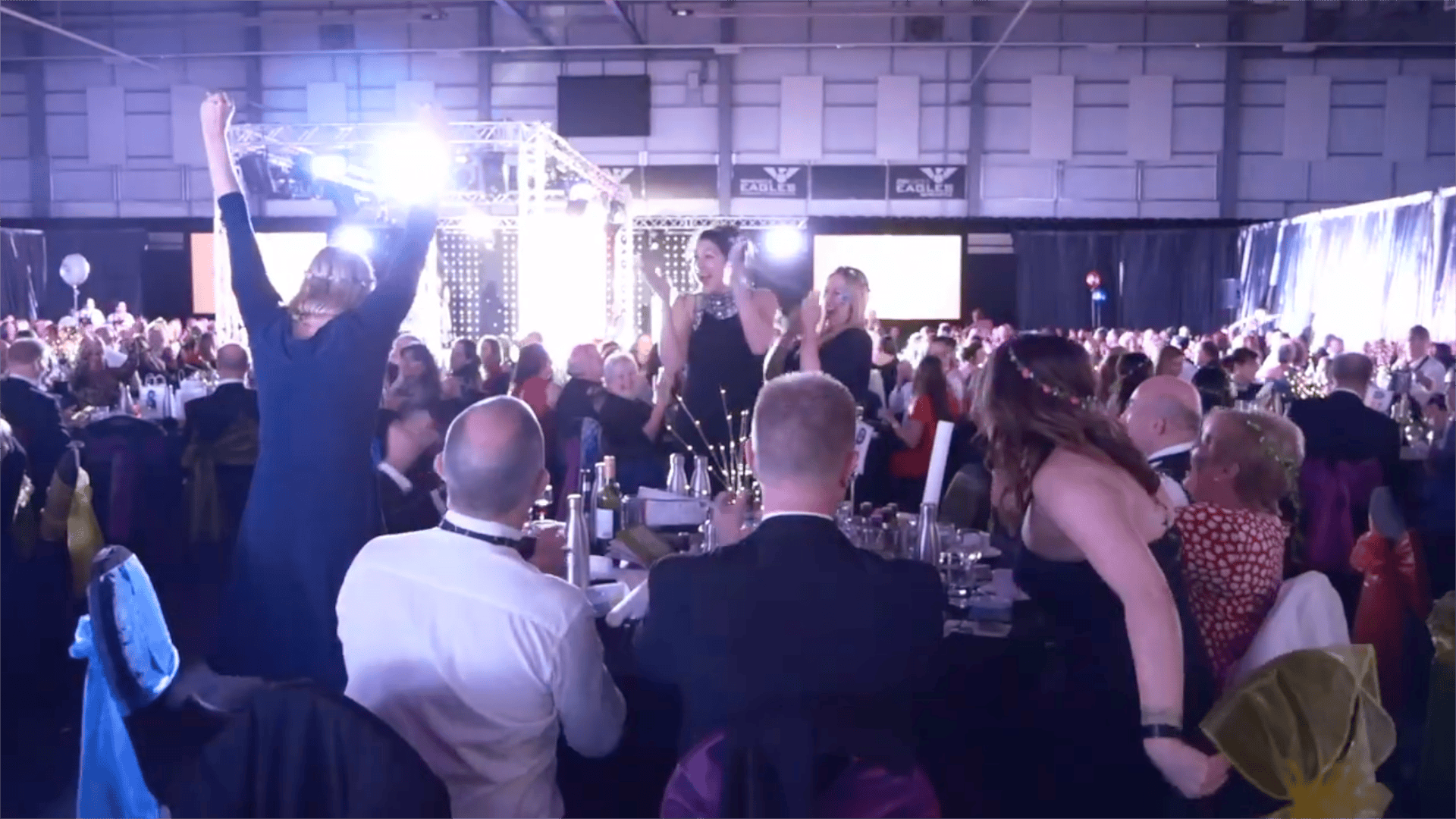
Real reactions. A packed row. Two people still talking after the session ends. A speaker’s best line, captured cleanly with proper sound. That’s what makes someone feel they’ll miss out.
Stock footage and staged shots do the opposite. Your audience spots them instantly, and it tells them you had nothing real to show.
Which is why the event itself is the most valuable shoot you’ll do all year.
The best promo for next year is filmed at this year’s event
Hardly anyone plans for this, and it’s the biggest missed opportunity in event marketing.
North East Network run a flagship business event at Lumley Castle. The record of it used to be whatever phone footage people happened to take on the day. That’s a problem, because a weak or late film undersells the event to everyone who wasn’t there, and those are exactly the people you need next time. We filmed three editions on the bounce, spring, Christmas and the following spring, and delivered a landscape and a portrait cut each time within three to four days. You can see how we covered North East Network’s Lumley Castle events on the case study.
Tennick Accountants took it further. We spent three days in London filming around Graeme’s main stage talk at the Digital Accountancy Show, and that work now sits inside a twelve month plan that sets out what gets delivered each quarter. The Tennick Accountants case study shows how one big moment fed a whole year.
No previous event to film? A launch can still work this way. For the Northern Saints Trails launch, a single promo covering all six routes sat alongside the standalone films, ready to go the day the trails were announced.
Film your event properly and one day gives you the highlight reel, next year’s promo, speaker clips, sponsor content and attendee reactions. Our event video production page shows what that covers. And if you want those reactions turned into proper video testimonials, your event is the easiest place you’ll ever record them. Everyone you need is already in one room.
One video, five versions, released on a schedule
Release the main promo four to six weeks out. Then don’t stop.
Cut it down for every place it lives:
- Instagram and TikTok: vertical, fast, under 60 seconds
- LinkedIn and Facebook: square or landscape, a touch slower, message first
- Website and YouTube: the full version
- Email: a thumbnail and a link, never an attachment
- Speakers and sponsors: their own clip to share with their own audience
That last one gets ignored. Your speakers have audiences you don’t. Hand each of them a ten second clip with their name on it and ask them to post it. Most will.
Then keep the drip going. A speaker clip one week. A quote card the next. A reminder ten days out. This is where a video retainer earns its keep, because the content keeps coming between events instead of arriving in a panic three weeks before the next one.
Frequently asked questions
How far in advance should I release my event promo video?
Four to six weeks before the event for the main cut, then shorter clips every week or so right up to the day. Leave it to the final fortnight and you’re competing with everything already in people’s diaries.
Do I need a professional video team, or can we film it ourselves?
For behind the scenes clips, a phone in good hands is fine. For the main promo and the event film, the thing representing your brand in public, sound and lighting are where DIY falls down. I’ve written more on when to bring in a production agency and when to keep it in house.
How much does an event promo video cost?
It depends on whether you already have footage, how many versions you need and whether we’re filming the event itself. Our price guide shows what different budgets buy, so you can see the options before speaking to anyone.
We’ve never filmed our event. Can we still make a promo?
Yes. A short shoot with your speakers, your venue and the people behind the event can carry a first promo. Then film this year’s event properly so next year you’re not starting from zero.
What if the video goes out and ticket sales don’t move?
Look at the message before the edit. Usually the video is selling the wrong thing, the venue instead of the outcome, or it’s reaching the wrong people. Fix who it’s for and what they get, and the same footage often starts working.
The room happens once
Every event you run without filming it properly is a year of promotion you never get back.
The room happens once.
The people who weren’t there decide whether to come next time based on what you show them.
If you’ve got an event coming up, tell us about it here and we’ll talk through what it needs to fill the room, this year and next.
So what’s your next event, and what will you have to show for it the day after?